The Danger of Improper Washing
Most hairline scratches (known as "swirl marks") are not caused by road gravel or tree branches. They are caused during the wash process itself. When dust, grit, and road film are dragged across the lacquer with a sponge or an dirty cloth, they act like sandpaper, creating microscopic grooves that dull your paint's reflection.
Our Careful Multi-Stage Washing Method
We approach every wash with a systematic safety margin to prevent scratch formation. We do not use aggressive mechanical brushes. Instead, we use a multi-step chemical and manual washing procedure:
Step 1: Wheel & Arch Rinse
We start with the wheels, arches, and tyres. Removing thick brake dust and mud first ensures these abrasive particles don't get splashed onto already-cleaned paintwork.
Step 2: Snow Foam Pre-Wash
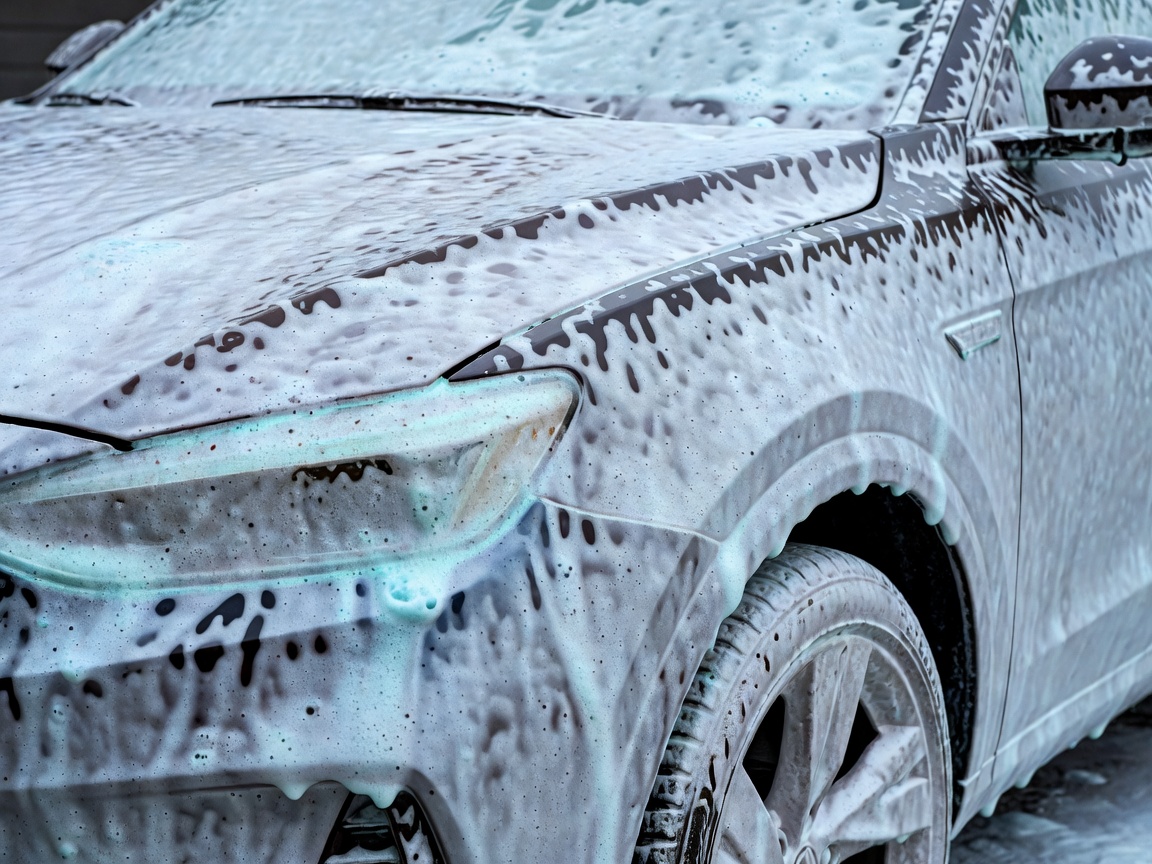
A thick layer of high-cling snow foam is applied to the dry vehicle. This sits on the surface for several minutes, encapsulating grit and road film. It is then rinsed thoroughly with a pressure washer—lifting up to 80% of surface dirt without any physical rubbing.
Step 3: Two-Bucket Contact Wash
We use one bucket for fresh, pH-neutral shampoo and a second bucket containing clean water to rinse the wash mitt. Grit guards sit in the bottom of both buckets to trap abrasive particles at the base, ensuring they never touch your car's paint.
Step 4: Microfibre & Air Dry
Drying is just as important. Dragging a dry leather chamois can scratch paint. We use dense, absorbent microfibre towels combined with warm, filtered blow-drying for intricate areas like door mirrors, badges, and panel gaps where trapped water can cause unsightly run-streaks.
Realistic Expectations
A safe wash will leave your paint physically clean and reduce dirt buildup, but it cannot repair existing scratches or fade marks already present in the clear coat. For scratch reduction, we recommend examining our machine polishing options on the Detailing Page.