Why Is Paint Decontamination Essential?
Even if a vehicle's paintwork looks clean after washing, running your hand gently across the dry panels will often reveal a rough, sand-like texture. These are tiny, invisible contaminants bonded directly to your lacquer:
- Iron Fallout: Microscopic particles from brakes and train tracks that heat up and burn into the clear coat, forming rust spots.
- Road Tar: Black, sticky spots thrown up from freshly laid road surfaces that resist ordinary car shampoo.
- Organic Matter: Sticky tree sap, bird droppings, and insect splats that chemically eat into the clear coat if not treated.
Our Multi-Phase Detailing Workflow
We handle detailing work with strict care, checking paint health before choosing any abrasive actions.
1. Paintwork Inspection & Thickness Measurement
We measure the paint thickness using digital gauges across every panel to verify there is enough clear coat depth for any polishing steps. If clear coat is too thin from past treatments, machine polishing is avoided to preserve your paint.
2. Chemical Decontamination
We apply safe pH-neutral iron fallout dissolvers and active tar removers to melt bonded particles chemically. This dissolves iron spots and tar without scrubbing, preventing scratches.
3. Clay Bar Treatment
For any remaining stubborn particles (like overspray or embedded tree sap), we glide a detailing clay bar with plenty of dedicated lubricant over the paint surface, lifting out impurities and leaving the lacquer glass-smooth.
4. Optional Paint Gloss Enhancement
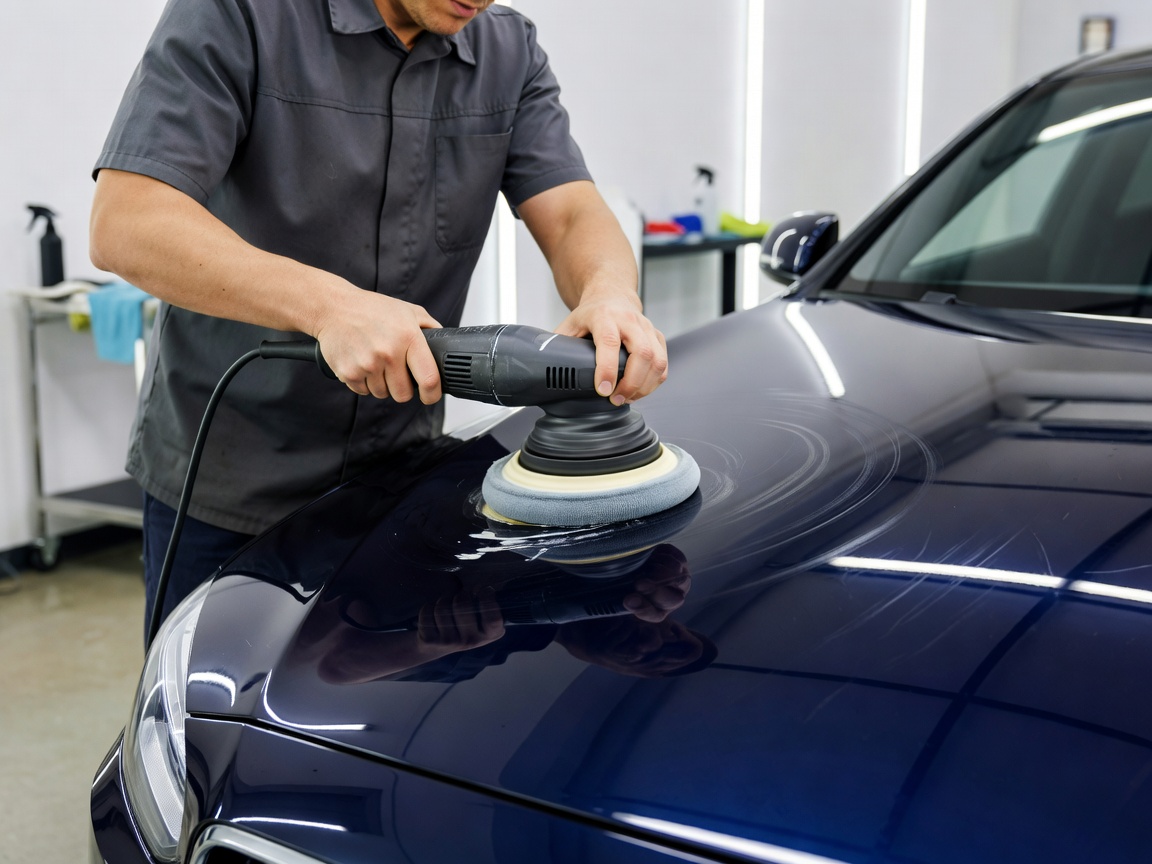
Using dual-action machine polishers, we can gently polish the top clear coat layer to reduce fine washing swirls and bring back depth of colour. We do not offer "perfect, complete paint correction" because aggressive polishing can risk stripping away crucial paint thickness.
Cautions & Realistic Expectations
Machine polishing can reduce fine scratches and make paint feel smoother and deeper. However, deep scratches, stone chips, paint chips, clear coat peel, or major fading from sun damage cannot be repaired or restored through polishing alone. They require actual paint respraying.